Designers in the exhibition will include Miguel Adrover, Thom Browne, Christopher Bailey (Burberry), Hussein Chalayan, Francisco Costa (Calvin Klein), Christophe Decarnin (Balmain), Ann Demeulemeester, Dior, Domenico Dolce and Stefano Gabbana (Dolce and Gabbana), John Galliano, Nicolas Ghesquière (Balenciaga), Katharine Hamnett, Viktor Horsting and Rolf Snoeren (Viktor & Rolf), Christopher Kane, Rei Kawakubo (Comme des Garçons), Karl Lagerfeld (Chanel), Helmut Lang, Martin Margiela, Malcolm McLaren, Alexander McQueen, Franco Moschino and Rossella Jardini (Moschino), Kate and Laura Mulleavy (Rodarte), Miuccia Prada, Gareth Pugh, Zandra Rhodes, Hedi Slimane (Saint Laurent), Stephen Sprouse, Jun Takahashi (Undercover), Joseph Thimister, Riccardo Tisci (Givenchy), Gianni Versace, Junya Watanabe, Yohji Yamamoto, and Vivienne Westwood.
The surrounding walls of the exhibit were made of bottles and cans with ceramic over them to mimic the punk rugged style. The exhibit focused on the DIY ("do it yourself") component of punk style by providing examples of clothing with pressed beer bottle caps, rips, paper clips, scotch tape, plastic shopping bags, trash bags, graffiti and splatter paint.
The following photos - Left: a photo from the MET, Right: 2009 McQueen designs which were inspired by trash bags


The punk galleries also showcased the history of punk fashion. Punk style originated in New York in 1964 and appeared in London in 1975. A main focus of the history of punk is the collaboration between designers Malcolm McLaren and Vivienne Westwood in the early 1970s who worked for the boutique 'Sex' in London. Westwood and McLaren are largely responsible for making punk fashion mainstream.
The following picture -- Left: picture from the exhibit Right: Vivienne Westwood designs

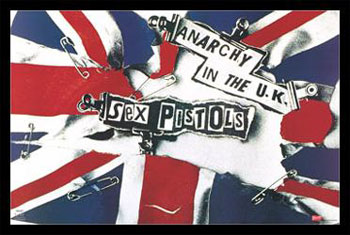
The exhibit also focused on influences from music such as Sex Pistols and the Ramones.


No comments:
Post a Comment